
IndusInd Bank was the top gainer in the Sensex pack, rallying around 7 per cent, followed by ICICI Bank, Axis Bank, HDFC, Bharti Airtel, SBI, Bajaj Finance and HDFC Bank. On the other hand, RIL was the top laggard, crashing over 8 per cent. HCL Tech, TCS, Tata Steel, Asian Paints, Bajaj Auto, Maruti and UltraTech Cement also ended in the red.
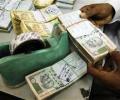
Exporters body FIEO said the slide in rupee, which closed at all-time low of 60.72 against the dollar, was a "serious" matter and asked traders to use derivatives to hedge the currency risk.
.jpg)
And with prices low, the equilibrium real exchange rate will also be low, that is to say depreciated.

Apart from bringing the margins down, the rupee fall is likely to hit the sentiments of global PE investors on India.

ONGC was the top loser in the Sensex pack, shedding around 3 per cent, followed by IndusInd Bank, PowerGrid, Axis Bank, HCL Tech, NTPC and ITC. On the other hand, UltraTech Cement, TCS, Tata Steel, Titan and HDFC were among the gainers.

Currency played an important role in Q2, with US dollar, Japanese yen and euro appreciating vis-a-vis the Indian rupee, while the Brazilian real, South African rand and Russian ruble depreciating against rupee.

India's forex reserves declined by $2.36 billion to $583.53 billion during the week ended October 20, according to the Reserve Bank of India data. In the previous reporting week, the overall reserves had increased by $1.15 billion to $585.89 billion. In October 2021, the country's forex kitty reached an all-time high of $645 billion.

A rising rupee is a tailwind for dollar investors.
.jpg)
The country has slipped two positions to sixth to tie with Germany, the survey by research firm Ipsos said.
The rupee's sharp depreciation has been the most important issue in the current debate on the state of the economy.

Oil Minister M Veerappa Moily has suggested pricking the ballooning oil bill with everything from a street theatre campaign encouraging lower fuel use, to shutting fuel stations, to increasing imports from Iran.

Top gainers in the Sensex pack on Friday included IndusInd Bank, Bajaj Finance, M&M, SBI, ICICI Bank and Vedanta, rising up to 1.90 per cent.
Prabhat Awasthi of Brics Securities also says that they have been positive on banks and that there is still value in public sector banks.
India's foreign exchange reserves declined $867 million to $593.04 billion in the week ended September 15, the Reserve Bank said on Friday. In the previous reporting week, the overall reserves dropped $4.99 billion to $593.90 billion. In October 2021, the country's reserves had touched an all-time high of $645 billion.
India's real gross GDP grew by 7.4 per cent year-on-year in the second quarter of 2004 and the rupee depreciated by less than 1 per cent in the first half of the same, the US treasury department has said in a report.

The rupee had lost 13 paise to close at 55.66 on Tuesday because of fag-end dollar demand from importers.

However, if the rupee depreciates much, the economy in dollar terms would be that much smaller.

A rebound in oil prices, FII outflows and concerns over current account deficit weighed on the domestic currency, pushing it to fresh life-time lows.

Sharma was addressing the members of the Board of Trade, a body comprising captains of Indian industry.

After multiple weeks of decline, India's forex reserves increased by $1.15 billion to $585.89 billion during the week ended October 13, according to the RBI data. In the previous reporting week, the overall reserves had dropped by $2.17 billion to $584.74 billion. In October 2021, the country's forex kitty reached an all-time high of $645 billion.
India Inc is unfazed by the sharp fall of the rupee against the greenback as most big firms have already hedged their foreign exchange exposures.

Prime Minister's key economic advisor C Rangarajan on Friday lowered the growth forecast for the current fiscal to 5.3 per cent from 6.4 per cent projected earlier and listed out host of measures including further liberalisation of foreign direct investment norms to improve economic condition.

May touch 64/$ due to foreign flows slowing down

After opening on a weak note, the 30-share BSE index settled 226.79 points, or 0.55 per cent, higher at 41,613.19 -- hitting an intra-day high of 41,697.03 and a low of 41,275.60. Likewise, the broader NSE Nifty closed 67.90 points, or 0.56 per cent, up at 12,248.25.

The rupee will largely remain stable but with a mild depreciating bias in the next one year

The country's forex reserves dropped by a further $2.166 billion to $584.74 billion for the week ended October 6, the RBI said on Friday. India's forex kitty had gone down by $3.79 billion to $586.91 billion in the previous week. It can be noted that in October 2021, the country's forex kitty had reached an all-time high of $645 billion.
The steep fall of the Rupee is not just making things scary for the Indian economy and economists.

'Most importantly, marking a departure from the past, the RBI has made it clear that it is not overtly worried about the level of the local currency,' notes Tamal Bandyopadhyay.
Delhi-NCR and Mumbai are still the most preferred destinations for NRIs to buy property, say property brokers.

Weighed down by a weak rupee, the Reserve Bank on Tuesday chose to keep all key interest rates unchanged and asked the government to take urgent steps to reign in the high current account deficit.
India's forex reserves dropped further by $3.79 billion to $586.91 billion for the week ended September 29, the Reserve Bank said on Friday. In the previous reporting week, the overall reserves had declined by $2.33 billion to $590.70 billion as of September 22. It can be noted that in October 2021, the country's forex kitty had reached an all-time high of $645 billion.

India's forex reserves dropped by $4.992 billion to $593.904 billion for the week ended September 8, the Reserve Bank of India said on Friday. In the previous reporting week, the kitty had jumped $4.04 billion to $598.9 billion. The country's forex kitty had reached an all-time high of $645 billion in October 2021.
Finance Minister P Chidambaram on Friday maintained that the rupee was "still strong," despite yielding ground to the dollar, and noted that the Indian currency had gained against other major currencies like euro, pound and yen.

The report, however, said a sustained weakness in USD against the emerging market forex remains a key risk to this view.

The rupee, which has depreciated about 23 per cent since May, has increased the loss ratios for the travel insurance segment.
India's forex reserves jumped by $4.039 billion to $598.89 billion for the week ended September 1, the Reserve Bank said on Friday. In the previous reporting week, the overall reserves had dropped by $30 million to $594.86 billion. It can be noted that in October 2021, the country's forex kitty had reached an all-time high of $645 billion.

Wage hikes and rupee depreciation may affect the business.

RBI steps up interventions to prevent rupee gains.

The ballooning of crude prices has significantly increased the country's oil import bill and it can also lead to a worsening of the current account deficit and fiscal deficit for the domestic economy.

At the Interbank Foreign Exchange market, rupee opened weak at 55.57 from last Friday's close of 55.50.
